SEDA HV RBSB
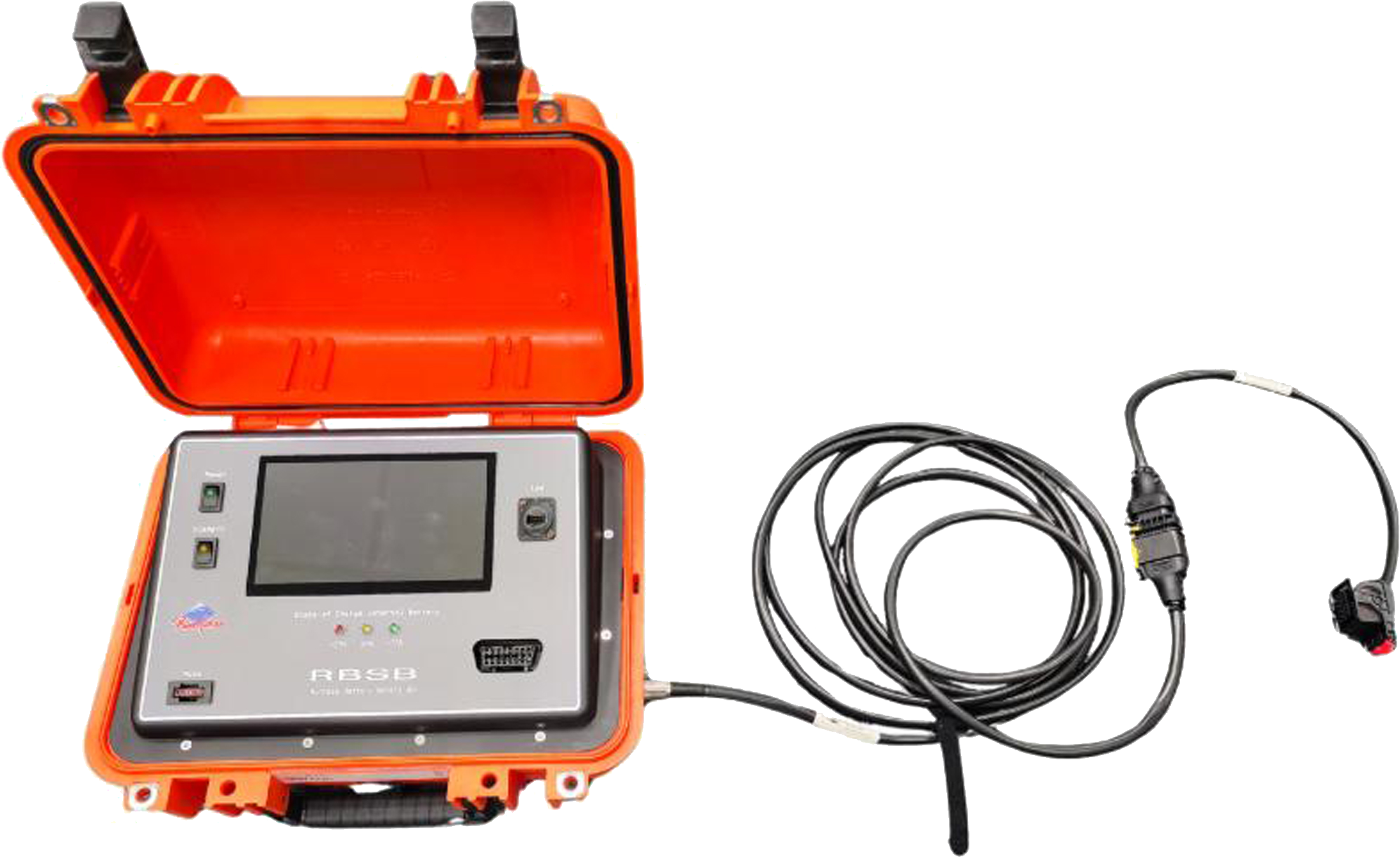
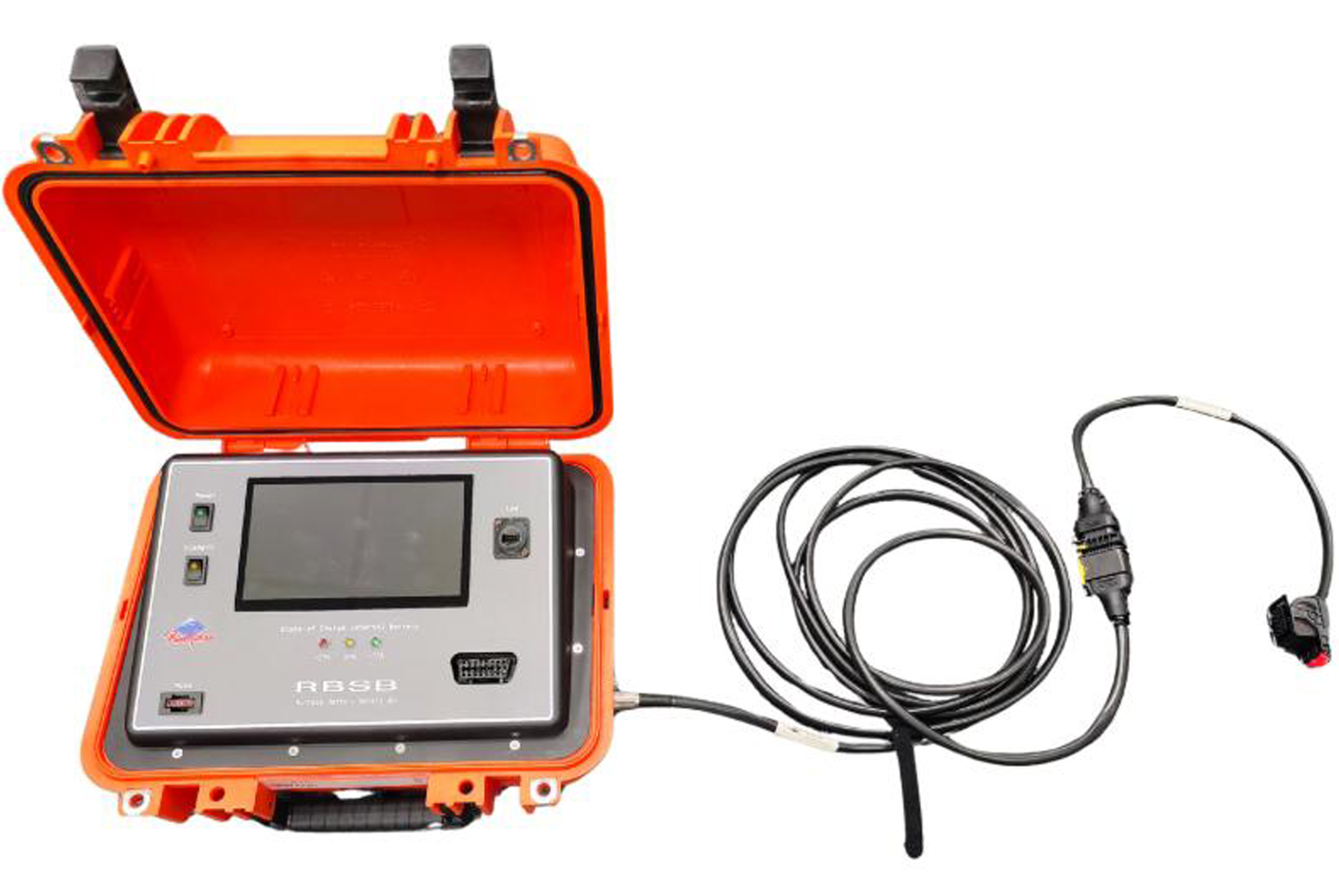
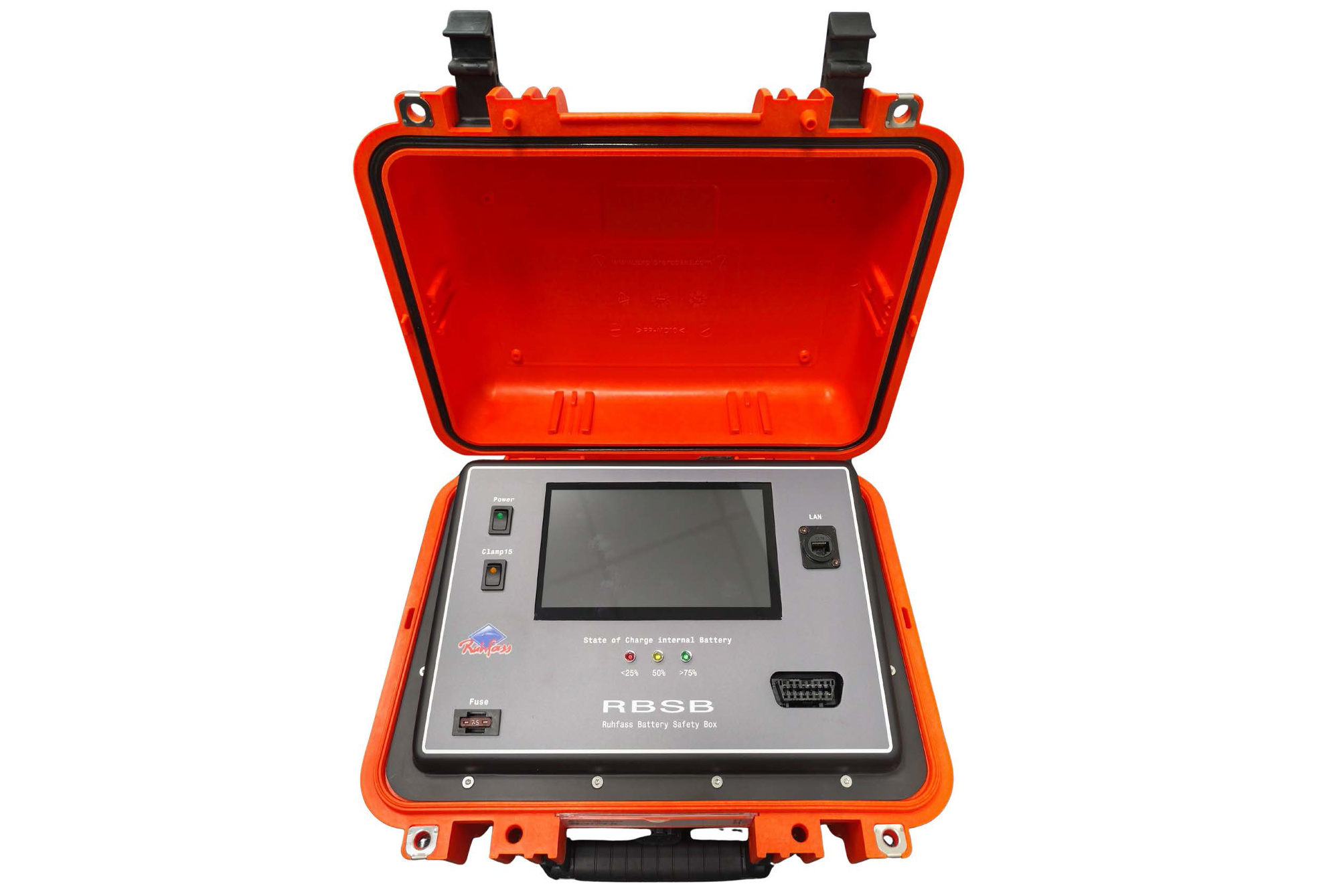
The RBSB can operate completely autonomously thanks to its internal battery and single-board computer. In addition, the RBSB features a touch display (HMI) for operation and for displaying measured values.
In addition, it supplies a voltage source and immediately reads out battery parameters.
Using an evaluation performed by a software module in the RBSB and via a PC tool, the hazard level can be assessed on the basis of defined threshold values.
Technical Data
| GENERAL: | |
| Dimensions | 36 x 30 x 19 cm |
| Weight | 4,75 kg |
| Nominal voltage | 12 V |
| Max. continuous current | 10 A |
| Max. short-term current | 20 A (10 seconds) |
| Battery runtime | 4-6 h (depending on the power consumption of the connected high-voltage battery, deviations may occur) |
| Operating temperature range | -20 bis 45°C (charging the internal battery only between 10 and 45 °C) |
| INTERNAL BATTERY: | |
| Nominal voltage | 12 V |
| Nominal capacity | 12 Ah |
| Energy content | 128 Wh |
| Cycles | >= 2000 |
| Cell chemistry | Lithium iron phosphat (LiFePO4) |
Order Number
| N-91000 | SEDA HV RBSB |
Downloads
Adapter
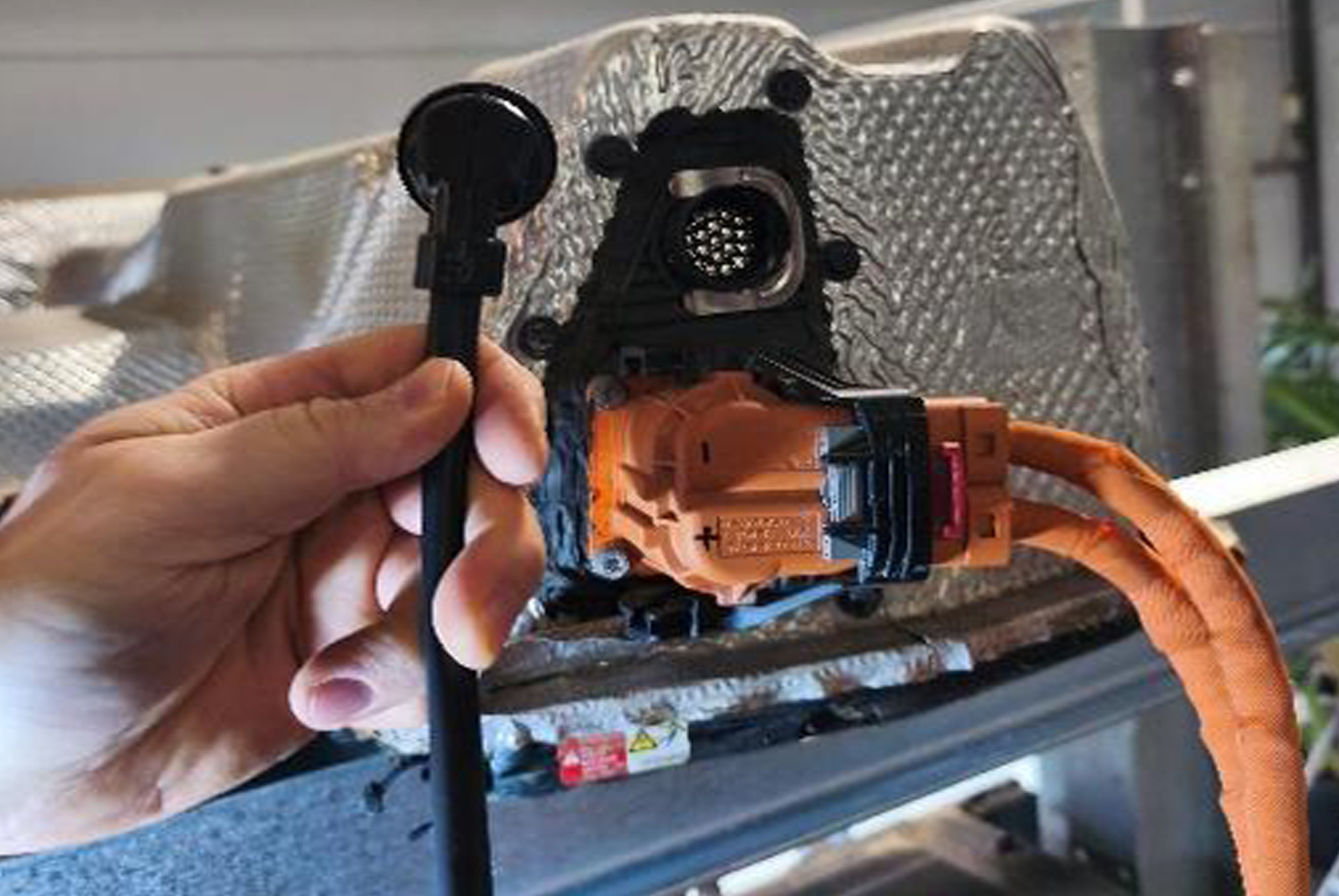
Audi C-BEV vehicles
- Audi e-tron 55 – 95 kWh
- Audi e-tron 55 – 114 kWh
- Audi e-tron 55 quattro – 95 kWh
- Audi e-tron 55 quattro (W47/2019 >>) – 95 kWh
- Audi e-tron 50 quattro – 71 kWh
VAG PPE platform (Premium Platform Electric)
- Audi Q6 /A6 e-tron – 83,7 kW
- Audi Q6 e-tron quattro – 100 kWh
- Audi SQ6 e-tron – 100 kWh
- Audi A6 e-tron quattro – 100 kWh
- Audi RS A6 e-tron quattro – 100 kWh
- Porsche Macan 4 Electric – 100 kWh
- Porsche Macan Turbo Electric – 100 kWh
VAG J1 platform (Audi, Porsche)
- Audi e-tron GT Basis – 79 kWh
- Audi e-tron GT quattro – 93,4 kWh
- Audi RS e-tron GT – 93,4 kWh
- Audi e-tron GT (06/2024 >>) – 105 kWh
- Audi RS e-tron GT (06/2024 >>) – 105 kWh
- Porsche Taycan Performance Battery – 79 kWh
- Porsche Taycan Performance Battery Plus – 93 kWh
- Porsche Taycan Turbo – 93 kWh
- Porsche Taycan Turbo S – 93 kWh
- Porsche Taycan GTS – 93 kWh
VAG MEB platform (Modular Electric Drive Matrix)
- Audi Q4 e-tron 35 – 55 kWh
- Audi Q4 e-tron 40 – 62 kWh
- Audi Q4 e-tron 45 – 82 kWh
- Audi Q4 e-tron 50 – 82 kWh
- Audi Q4 e-tron Sportback 35 – 55 kWh
- Audi Q4 e-tron Sportback 40 – 62 kWh
- Audi Q4 e-tron Sportback 45 – 82 kWh
- Audi Q4 e-tron Sportback 50 – 82 kWh
- Audi Q4 e-tron Sportback 55 – 82 kWh
- VW ID.3 Pure – 48 kWh
- VW ID.3 Pure Plus – 55 kWh
- VW ID.3 Pro – 62 kWh
- VW ID.3 Pro S – 82 kWh
- VW ID.4 Pure – 55 kWh
- VW ID.4 Pure Performance – 55 kWh
- VW ID.4 Pro – 82 kWh
- VW ID.4 Pro Performance – 82 kWh
- VW ID.4 GTX – 82 kWh
- VW ID.5 Pure – 55 kWh
- VW ID.5 Pro – 82 kWh
- VW ID.5 Pro Performance – 82 kWh
- VW ID.5 GTX – 82 kWh
- VW ID.7 Pro – 82 kWh
- VW ID.7 Pro S – 91 kWh
- VW ID.Buzz Pure – 63 kWh
- VW ID.Buzz Pro (SWD) – 82 kWh
- VW ID.Buzz Pro (LWD) – 91 kWh
- Cupra Born – 62 kWh
- Cupra Born – 82 kWh
- Cupra Born VZ – 82 kWh
- Cupra Tavascan Pro – 82 kWh
- Cupra Tavascan VZ – 82 kWh
- Skoda Enyaq iV 50 – 48 kWh
- Skoda Enyaq iV 55 – 55 kWh
- Skoda Enyaq iV 60 – 62 kWh
- Skoda Enyaq iV 80 – 82 kWh
- Skoda Enyaq RS iV – 82 kWh
- Skoda Elroq 50 – 55 kWh
- Skoda Elroq 60 – 63 kWh
- Skoda Elroq 85 – 82 kWh
- Skoda Elroq 85x – 82 kWh
- Skoda Elroq RS – 84 kWh
VW eGolf (MQB)
- VW eGolf (>> 2016) – 24,2 kWh
- VW eGolf (2017 >>) – 35,8 kWh
VAG e-up!, Mii electric, Citigo e iV (NSF)
- VW e-UP! (>> 2019) – 18,7 kWh
- VW e-UP! (2020 >>) – 36,8 kWh
- Skoda Citigo e iV – 36,8 kWh
- Seat Mii electric – 36,8 kWh
Stellantis eCMP (Electric Common Modular Platform)
- Peugeot e208 – 50 kWh
- Peugeot e208 – 54 kWh
- Peugeot e2008 – 50 kWh
- Peugeot e2008 – 54 kWh
- Opel Corsa-e – 50 kWh
- Opel Corsa-e – 54 kWh
- Opel Mokka-e – 50 kWh
- Opel Mokka-e – 54 kWh
- Citroen e-C4 – 50 kWh
- Citroen e-C4 – 54 kWh
- Citroen e-C4 X – 50 kWh
- Citroen e-C4 X – 54 kWh
- DS Automobiles DS 3 E-Tense – 50 kWh
- DS Automobiles DS 3 E-Tense – 54 kWh
- Lancia Ypsilon BEV – 54 kWh
- Fiat 600e – 54 kWh
- Jeep Avenger BEV – 54 kWh
Benefits
- Fast, simple, and safe mobile on-site testing/monitoring
- No additional external power supply required
- Manufacturer-independent diagnostic system
- Reliable, intuitive process flow
- Immediate readout of battery parameters
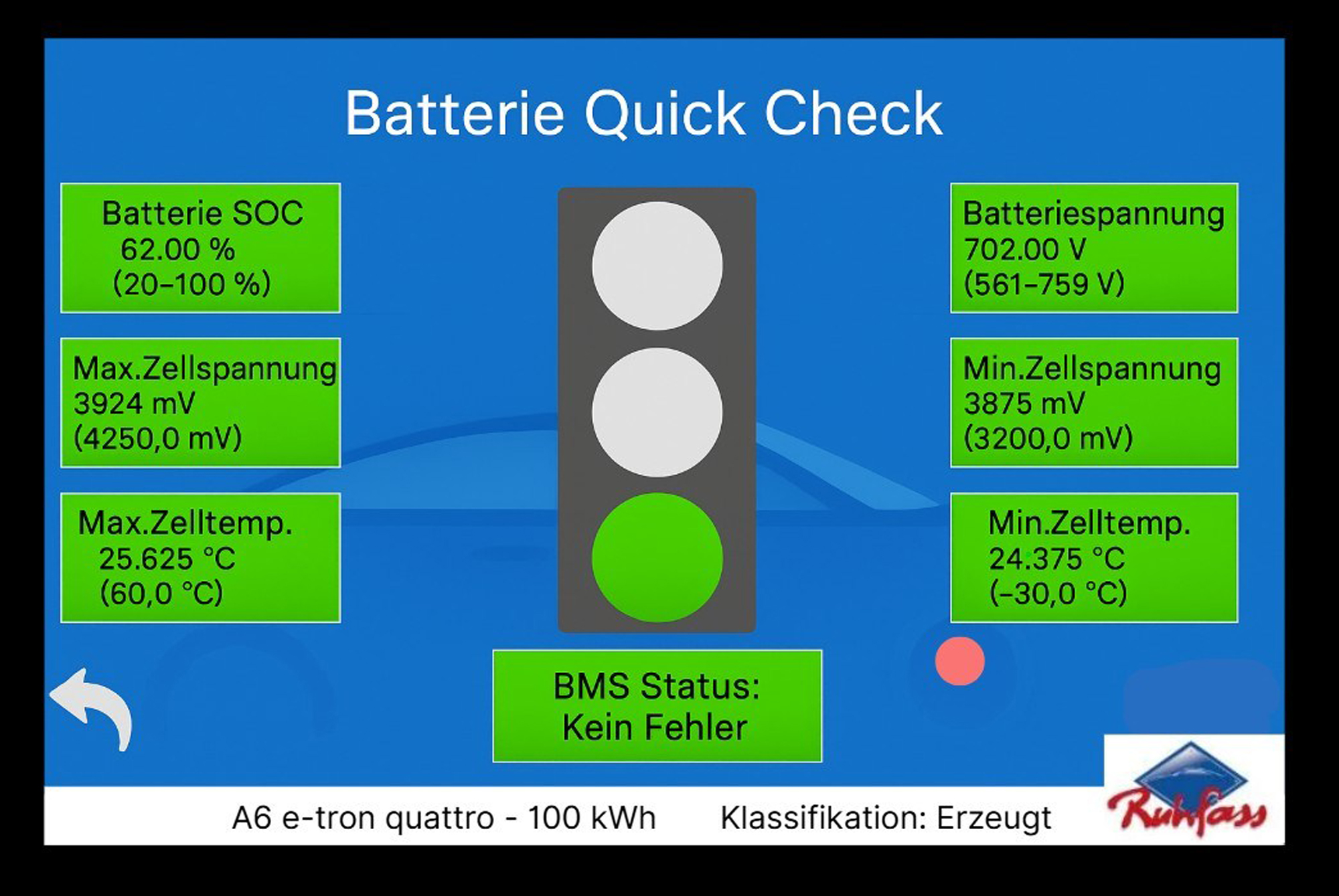
- Battery status displayed via a traffic-light indicator
- A data record can be generated as the basis for legally compliant transport classification
- Autonomous operation via HMI touch display
Video
Additional Information
The results are displayed on the HMI and by means of tools on a PC/laptop. With the “Battery Quick Check,” this status is shown via a traffic-light indicator (green/yellow/red).
In addition, a data set can be generated that serves as the basis for legally compliant transport classification in accordance with ADR, thereby enabling the transport or shipment of an HV battery. Furthermore, the RBSB enables diagnosis of the HV battery independently of the vehicle environment; for this purpose, it also provides a diagnostic interface for commercially available diagnostic devices.
Possible applications:
With the help of the RBSB, qualified personnel are able to monitor and assess the condition of a vehicle high-voltage battery independently of the vehicle.
The RBSB provides a cross-manufacturer diagnostic system for vehicle batteries. This means that issues such as additional costs, increased training requirements, and higher inventory effort are no longer a problem for logistics companies and multi-brand workshops.
As a rule, basic training in handling vehicle high-voltage batteries from motor vehicles is entirely sufficient (e.g. for automotive workshops/production/development in accordance with DGUV-I 209-093, Level 1S/1E).